01
Pyrolysis & biochar
Biomass is heated without oxygen so it decomposes instead of burning, leaving a carbon skeleton behind.
- Raw and crop-specific inoculated biochar
- Wood vinegar from the vapour stream
- Syngas recycled back as process heat

Carbon · Earth · Environment
CE2 turns agricultural and invasive biomass into stable carbon, cleaner fuel and healthier soil — through a single conversion process that pays for itself while it draws carbon down.

Most environmental problems in rural India are also material problems. Crop residue is burned because nobody will pay to move it. Invasive juliflora spreads because clearing it costs more than it returns. Households burn fuelwood because it is the cheapest heat available. Soils lose structure because nothing organic goes back into them.
CE2 connects these into one loop: the residue becomes feedstock, the feedstock becomes fuel and biochar, the biochar goes back into the soil, and the carbon stays there.
Each step has to stand on its own commercially — that is what makes the environmental outcome durable rather than dependent on grants.
See the full process →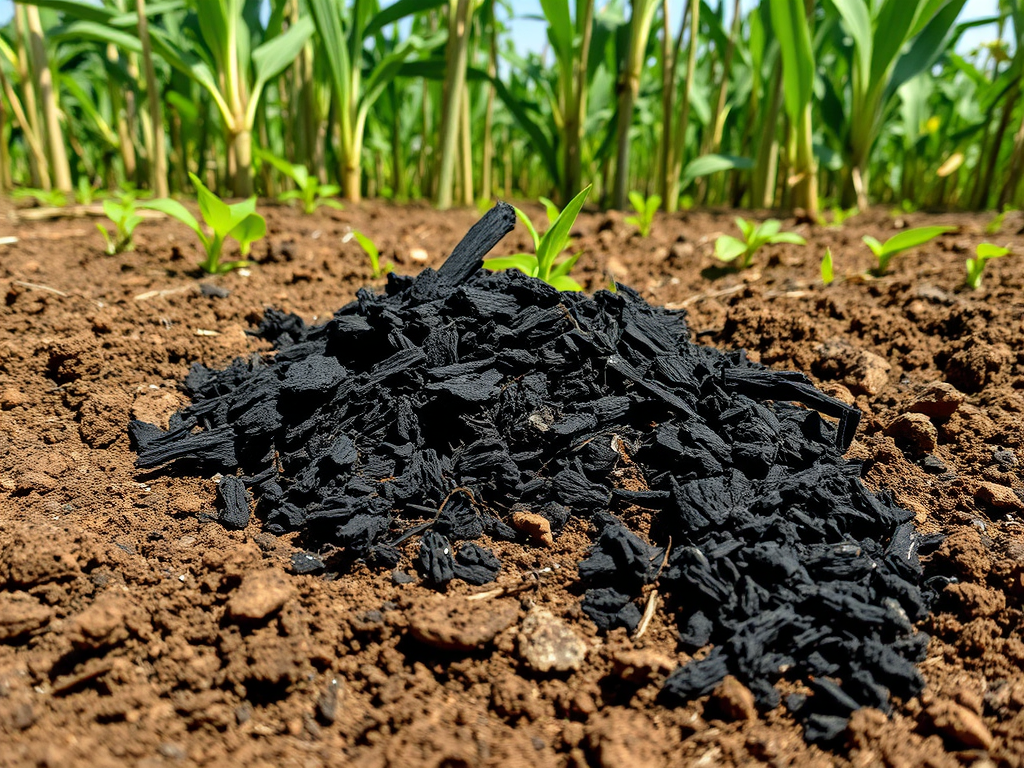
These are not separate business units. Each one exists because it makes the others viable.
Biomass is heated without oxygen so it decomposes instead of burning, leaving a carbon skeleton behind.
Residue that currently has negative value — burned, dumped or left to spread — is given a paying use.
Carbon that stays put is worth measuring. We build the record from the first batch, not after the fact.
Biochar is not fertiliser. It changes how soil behaves so water and nutrients stay available.
Burning and pyrolysis start with the same material and the same heat. The difference is air. Give biomass oxygen and it oxidises completely — you get heat, ash and carbon dioxide, and the carbon is gone.
Restrict the oxygen and the material cannot complete that reaction. It breaks down instead, shedding its volatile fraction as vapour and gas and leaving behind a rigid lattice of carbon rings that biology struggles to digest.
That resistance to decomposition is not a side effect — it is the product. It is what turns waste disposal into carbon storage.
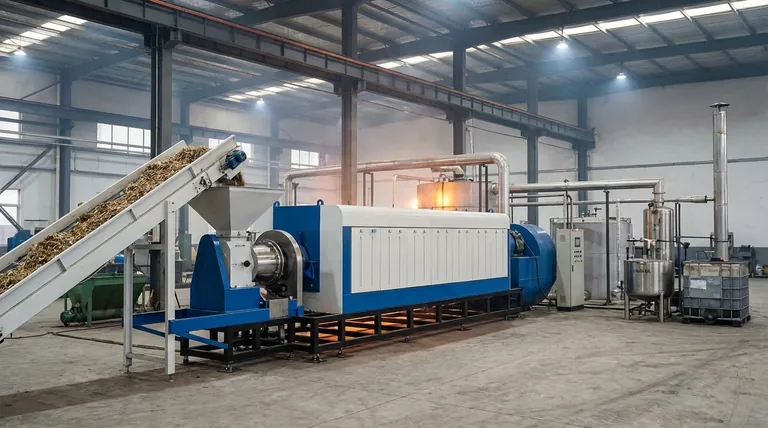
Residue aggregated from nearby villages
Transport distance decides whether the economics work, so collection is deliberately local. Material is gathered on a reciprocal basis — villages supply residue and receive domestic briquettes back at concessional rates, which removes the cash barrier on both sides. Feedstock is then sun-dried, because wet biomass consumes energy that should be going into conversion.
450–600 °C, sealed and oxygen-limited
Without oxygen the material cannot combust, so instead of turning to ash it thermally decomposes. Volatiles are driven off as vapour and gas, and what remains is a rigid, porous carbon structure. Temperature is the control variable: too cool and the carbon stays unstable, too hot and yield collapses. Holding the right band is what makes the carbon durable enough to count.
One input leaves as solid, liquid and gas
The solid is biochar, 80%+ stable carbon by mass. The vapour is condensed into wood vinegar, used as an agricultural biostimulant and natural pest deterrent. The syngas is routed back into the kiln as process heat, so the reaction largely sustains itself after start-up — which is what keeps operating cost and emissions down.
Densified into fuel, or prepared for soil
Briquettes are pressed for domestic and commercial use, burning cleaner than raw fuelwood and cutting indoor smoke exposure. Soil-bound biochar is crushed and inoculated — charged with compost or microbial slurry first, because raw biochar will otherwise adsorb nutrients out of the soil in its first season instead of holding them.
Incorporated at agronomic rates
The pore structure does the work: it holds water in sandy soils that otherwise drain too fast, buffers pH, and gives soil microbes physical habitat. Unlike compost, it does not break down within a season — the same carbon skeleton is still there decades later, which is precisely why this is storage and not just amendment.
Every batch logged against a defined method
Feedstock mass, moisture, kiln temperature curve, output mass and laboratory H/C ratio are recorded per batch, the H/C ratio being the standard proxy for how long the carbon will persist. Only soil-applied biochar is counted as removal — briquettes are combusted, so that carbon returns to the atmosphere and claiming it would fail verification.

From carbon challenge to carbon opportunity
Plants already pull carbon out of the air — the problem is that they give it straight back when they rot or burn. Pyrolysis interrupts that return.
By converting residue into a form that resists decomposition and putting it underground, the carbon a crop captured in one season stays out of the atmosphere for generations rather than months.
A pyrolysis plant is only as sound as what it eats. Sourcing wood that could have been timber moves carbon around rather than removing it, and fails verification besides. CE2 works exclusively from genuine waste and nuisance streams — material with no competing food, fodder or timber use.

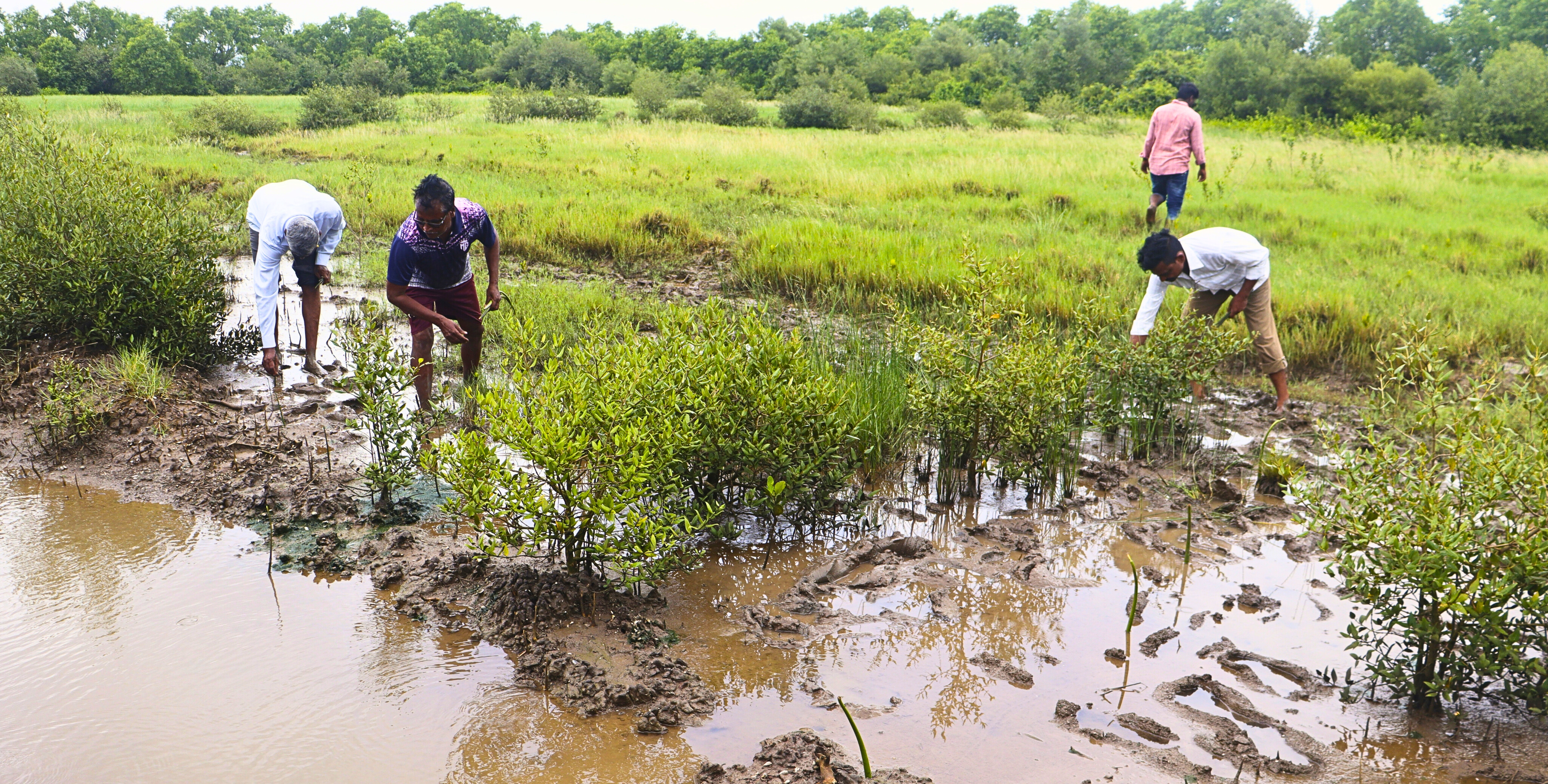
Soil carbon is one lever. Standing ecosystems are another, and they deliver things biochar cannot — water regulation, habitat, coastal protection and livelihoods that hold over decades.
A single process is asked to justify itself on four different measures at once.
Let's build what comes next
We welcome conversations with farmers and landowners, project and technology partners, researchers, offtake buyers, investors and organisations working toward measurable environmental outcomes.